
Psoriatic Arthritis and Skin Linked Joint Pain
When joint pain and a skin condition arrive together, the order of questions changes, and a government arthritis overview is a useful general reference. This guide sets out that order for a reader in Hawthorne, from the first note you write to the point where a treatment step is weighed.
Psoriatic arthritis is where a skin history and a joint problem meet. The sections below place it among the other arthritis conditions on the arthritis ladder, list what to gather, and end on the question that shows how near you are to a treatment decision.
Where psoriatic arthritis starts
Cleveland Clinic states: "Psoriatic arthritis (PsA) is a type of arthritis that affects people who have psoriasis or a biological family history of psoriasis."
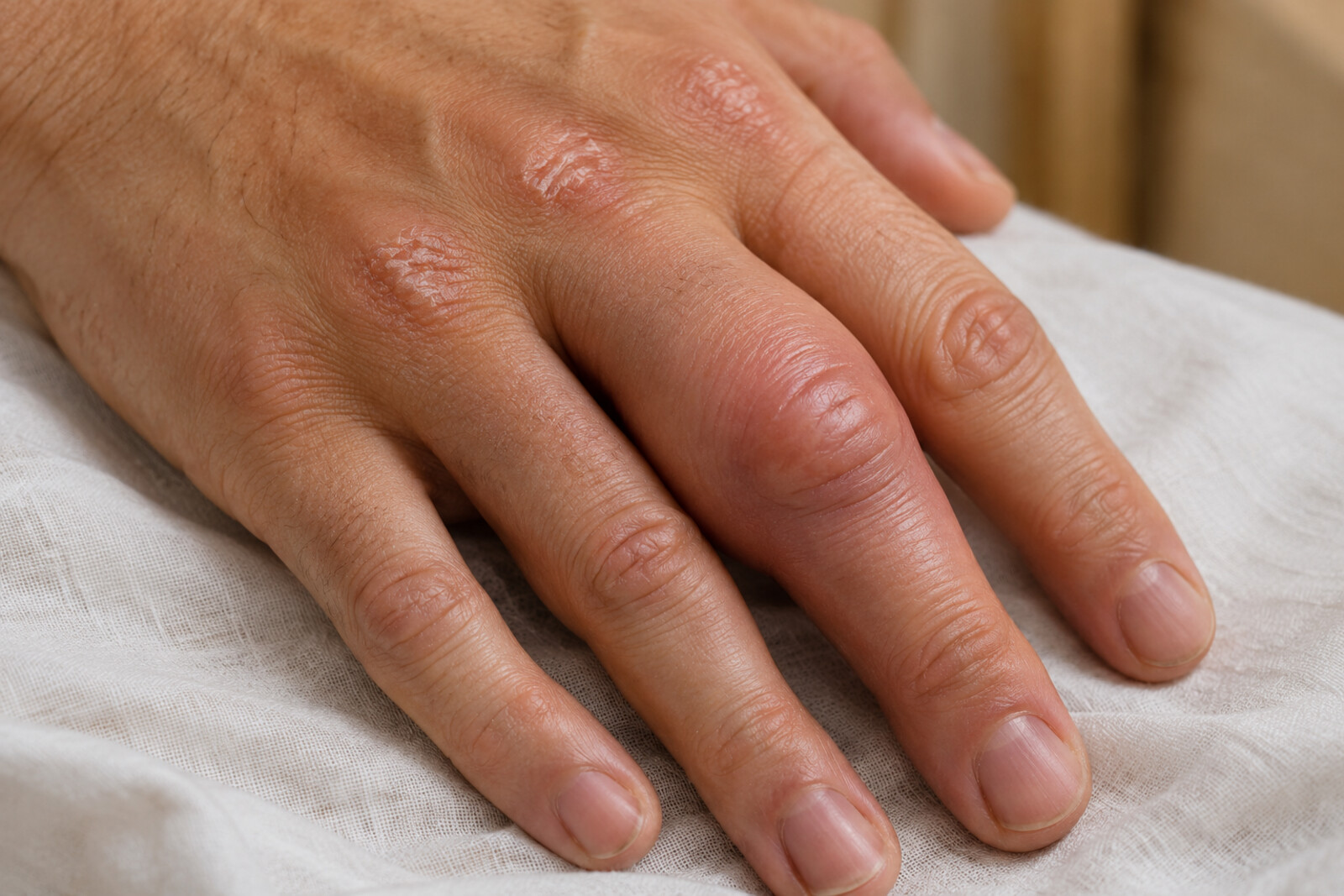
The skin is therefore part of the starting point, not a separate matter. Two details belong in your notes: any current or past psoriasis, and any psoriasis in your biological family.
What to gather before the first appointment
- When the joint pain began and which joints are involved.
- Any skin changes, with dates if you have them.
- Psoriasis in your biological family, as far as you know.
- Treatments tried so far and what they did.
Comparing it with other arthritis conditions
Placing one condition beside another is the quickest way to word your own symptoms. Cleveland Clinic's page on rheumatoid arthritis describes a different arthritis, and reading it beside your notes shows which details to prepare for a clinician.
What has to be true before a treatment step
A treatment step is weighed once a clinician has examined the joints and the skin and named the condition. Until that has happened, the least invasive step available to you is getting that examination. A government health-research page on rheumatoid arthritis can give you words for the questions to ask.
Are you near the next step?
The question to take away: has anyone looked at both your skin and your joints together? If so, a government health-research page on ankylosing spondylitis gives you further comparison reading for your follow-up questions. If not, that combined look is the next step.